



Description
What our Holidays: Rosh Hashanah lesson plan includes
Lesson Objectives and Overview: Holidays: Rosh Hashanah is a high-interest reading comprehension lesson plan. As such, students will practice various close reading and comprehension skills. In addition, they will learn about the origins of this Jewish holiday. This lesson is for students in 3rd grade, 4th grade, and 5th grade.
Classroom Procedure
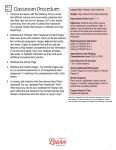
Every lesson plan provides you with a classroom procedure page that outlines a step-by-step guide to follow. You do not have to follow the guide exactly. The guide helps you organize the lesson and details when to hand out worksheets. It also lists information in the yellow box that you might find useful. You will find the lesson objectives, state standards, and number of class sessions the lesson should take to complete in this area. In addition, it describes the supplies you will need as well as what and how you need to prepare beforehand.
Teacher Notes
The paragraph on this page provides a little more information or guidance on what to expect from the lesson. It explains that you can teach this lesson in a whole-class setting or as an independent, small-group activity. You can use the blank lines to record any thoughts or ideas you have as you prepare.
HOLIDAYS: ROSH HASHANAH LESSON PLAN CONTENT PAGES
What Is Rosh Hashanah?
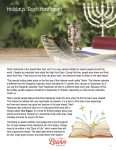
The Holidays: Rosh Hashanah lesson plan contains two content pages. Rosh Hashanah is the Jewish New Year, and it is a very special holiday for Jewish people around the world. It begins an important time called the High Holy Days. During this time, people slow down and think about their lives. They focus on how they can grow, learn, and become kinder to others in the year ahead.
This special holiday takes place on the first day of the Hebrew month called Tishrei. The Hebrew calendar is different from the Gregorian calendar, which includes the 12 months from January to December. So if you use the Gregorian calendar, Rosh Hashanah will fall on a different date every year. Because of this, the holiday usually happens sometime in September or October, depending on how the two calendars match up.
Purpose of the Holiday
Many Jewish people believe that Rosh Hashanah marks the time when the first humans were created. This makes the holiday feel very meaningful and special. It is a time to think about new beginnings and how each person can grow and improve in the year ahead. Rosh Hashanah also marks the start of a 10-day period that ends with a holiday called Yom Kippur. It’s a time for thinking deeply about your actions and choices. People try to remember times when they made mistakes and look for ways to fix them.
According to Jewish tradition, God judges the living throughout the 10 days between Rosh Hashanah and Yom Kippur. People hope to be written in the “Book of Life,” which means they will have a good year ahead. The idea helps remind everyone to be kind, make good choices, and treat others with respect.
Also during this time, people practice two important ideas called tzedakah and teshuvah. Tzedakah means helping people who need it, such as giving them food or money. Teshuvah means saying sorry and trying to fix your mistakes. Together, these actions help people become better and build stronger relationships with others. To wish someone a happy new year during Rosh Hashanah, people say, “L’shanah tovah.” In English, the phrase translates to, “For a good year.”
Celebrations and Traditions
Food plays an important role in Rosh Hashanah celebrations. Many of the foods have special meanings. People often eat apples dipped in honey to wish for a sweet new year. They also eat round challah bread with raisins; it represents the cycle of the year. Some families even serve the head of a fish to remind everyone to be strong, make good choices, and lead in positive ways. Other common foods they eat include pomegranates, tzimmes (a sweet dish made with carrots and sweet potatoes), and dates or other dried fruit.
Many Jewish families go to a synagogue during Rosh Hashanah. A synagogue is a place where people gather to pray and learn. One of the most important moments is when they blow the shofar. The shofar is a special instrument, usually made from the horn of a ram, that is carefully shaped to be blown like a trumpet. It is not played like music for fun. Instead, it is used to send an important message through its strong but meaningful sounds. It is blown in a series of different patterns. Each sound has a name and a meaning meant to remind people to reflect or think about their actions.
Rosh Hashanah is not a loud or wild celebration like some New Year holidays. Instead, it is calm and thoughtful. People take time to think about their actions and how they treat others. It is a peaceful time where families and communities come together to learn and grow. The holiday reminds people that their choices can shape the future. With kind actions and honest hearts, a new year can begin in a meaningful way. It is a hopeful time filled with chances to grow and do good.
HOLIDAYS: ROSH HASHANAH LESSON PLAN WORKSHEETS
The Holidays: Rosh Hashanah lesson plan includes two worksheets: an activity worksheet and a practice worksheet. Each one will help students solidify their grasp of the material they learned throughout the lesson. You can refer to the classroom procedure guidelines to know when to hand out each worksheet.
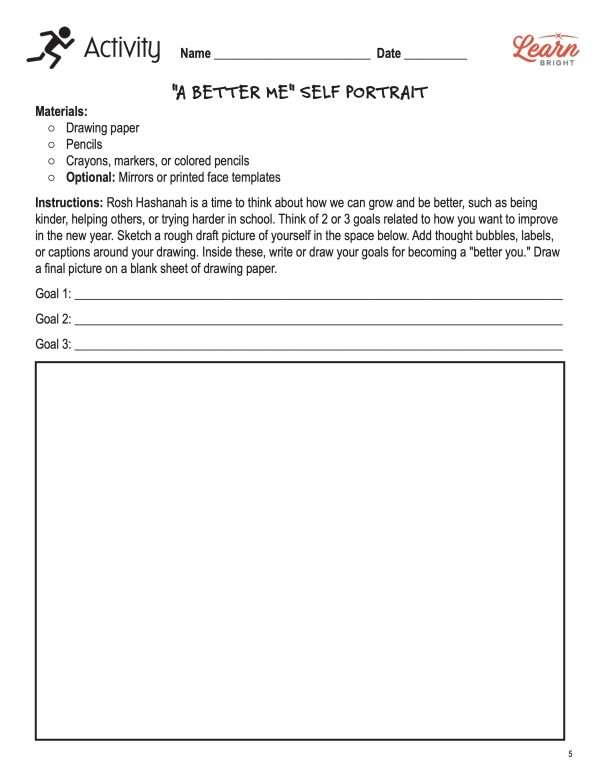
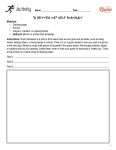
“A BETTER ME” SELF PORTRAIT ACTIVITY WORKSHEET
Rosh Hashanah is a time to think about how we can grow and be better, such as being kinder, helping others, or trying harder in school. For the activity, students will think of 2 or 3 goals related to how they want to improve in the new year. They will then sketch a rough draft picture of themselves in the space at the bottom of the worksheet. They will add thought bubbles, labels, or captions around your drawing. Inside these, they must write or draw the goals they chose. Once finished, they will draw a final picture on a blank sheet of drawing paper.
HOLIDAYS: ROSH HASHANAH REVIEW PRACTICE WORKSHEET
The practice worksheet requires students to answer a series of 10 questions. These questions all relate to the content pages, so students will need to refer to them often for the answers. In addition, each question provides which reading tool the question corresponds to, such as text feature, vocabulary, or comprehension.
Worksheet Answer Keys
At the end of the lesson plan document is an answer key for the practice worksheet. The correct answers are all in red to make it easier for you to compare them with students’ responses. If you choose to administer the lesson pages to your students via PDF, you will need to save a new file that omits these pages. Otherwise, you can simply print out the applicable pages and keep these as reference for yourself when grading assignments.


