
Description
What our Alphabet: Letter Z lesson plan includes
Lesson Objectives and Overview: Alphabet: Letter Z teaches young learners about the last letter of the alphabet. By the end of the lesson, students will be able to recognize the uppercase and lowercase letter Z and name at least two words that begin with Z. This lesson is for students in preschool.
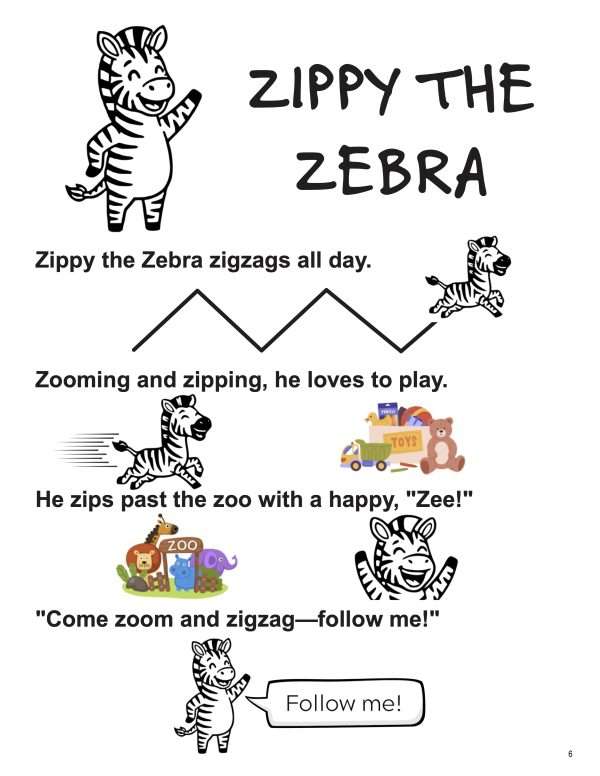
ZEBRA Zs ACTIVITY
For this activity, students will make zebra Zs using black pipe cleaners (or black felt pieces) by placing them as stripes on the Zz outline.
Options and Extensions
There is an additional option you could do to add to the lesson. Add black and white pom poms to a bin to make a zebra-inspired sensory box. Place small letter Zs around the inside of the box that students can discover as they scoop and dig around.
As an extension to the lesson, read Dear Zoo by Rod Campbell and Put Me in the Zoo by Robert Lopshire.
ADDITIONAL RESOURCES
Our preschool lessons include additional resources that you can use throughout the lesson. They are provided to give you as much content as possible to complete the lesson without their having to find sources on their own. For instance, if the lesson requires you to show students pictures, you can use the ones in the additional resources.
Preschool Philosophy
Our preschool curriculum is thoughtfully designed by professional teachers to nurture curiosity, build foundational skills, and prepare young learners for kindergarten and beyond. Each preschool lesson plan offers age-appropriate activities to promote early literacy, math readiness, creativity, and social-emotional growth.
At the preschool level, children are developing rapidly—socially, emotionally, physically, and academically. The goal of our lesson plans for preschool is to provide structured yet engaging learning experiences that spark imagination, encourage problem-solving, and foster a lifelong love of learning.
CURRICULUM FOCUS
Our curriculum focuses on key objectives such as:
- Building early literacy and language skills through stories, songs, and interactive activities.
- Developing number sense, shapes, colors, and patterns with hands-on lessons.
- Encouraging creativity and self-expression through art, play, and music.
- Supporting social-emotional development, cooperation, and confidence.
- Strengthening fine and gross motor skills through active learning.