

Description
What our Colors: Purple lesson plan includes
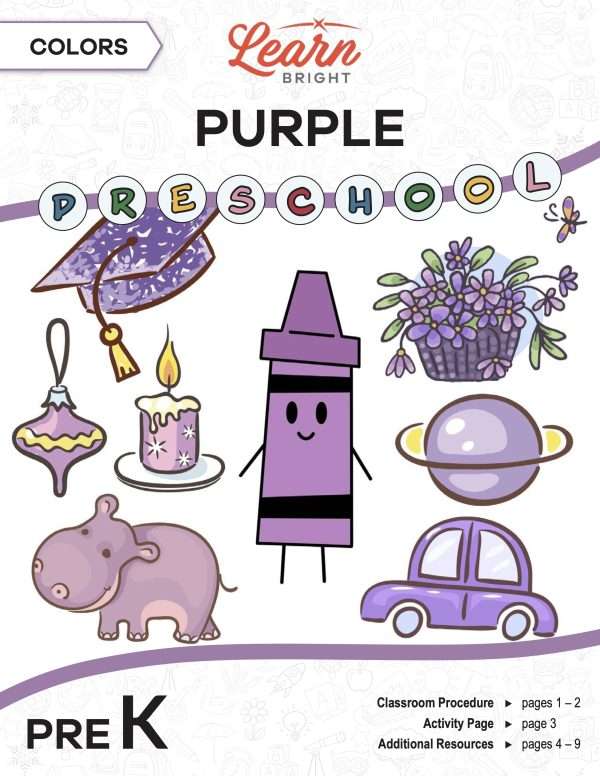
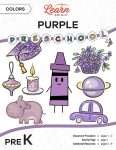
Lesson Objectives and Overview: Colors: Purple teaches young learners about this color. By the end of the lesson, students will be able to identify the color purple when shown three different crayon colors. This lesson is for students in preschool.
BUBBLE ART ACTIVITY
This fun activity requires students to use bubbles to create their works of art! Before the lesson, mix purple paint and dish soap, and add a little bit of water to thin it out. Place in shallow dishes. Cover the tables with a tablecloth if desired. The directions provide two ways to blow the bubbles. Try using both a bubble wand and a straw. Each method teaches different fine motor skills and yields slightly different results. Students will enjoy both methods. Alternatively, purchase a party favor bubble pack with small bubbles and add paint. Shake up and let the settle before using. Each student will have the perfect amount of bubble solution with less mess.
This lesson is meant to be used in conjunction with the other color lessons so that the artworks from the activity combine to create a large ocean mural. Once dry, use the coral templates from Additional Resources to cut out pieces of coral from the students’ purple bubble art. Display the corals with the blue ocean mural.
Options and Extensions
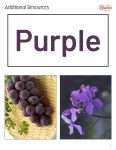
There are a number of options to include in this lesson if you want to. Have students wear purple to school. Another idea is to bring in purple food to try. Grapes, plums, eggplants, or fruit snacks work well. Gather items of different colors in a basket and provide a magnifying glass. Ask students to find and sort the purple items. Set up a color mixing station. Give students red and blue playdough and let them mix them to make purple.
Dye rice purple with red and blue food coloring and a few drops of vinegar. Place in a large sensory bin with measuring spoons, cups, and bowls. Let students scoop, measure, and explore the purple rice. Another fun option is to take a large piece of purple tissue paper and fold it in fourths. Cover a large flashlight or lamp with the purple tissue paper and secure with a rubber band to make a purple “stage” light. (Make sure the tissue paper is not directly touching the light bulb if using a lamp.) Dim the lights and let students dance or create shadow puppets in the light.
Give students a large piece of butcher paper or poster board and have them work together to create a purple image collage. They can draw pictures of purple items or glue items they bring from home (e.g., wrappers, crayons, yarn, fabric, magazine clippings, buttons, or tissue paper). One more idea is to color the purple crayon (see Additional Resources). Keep each crayon until the students have learned all the colors, then give students a small envelope with the flap cut off to color as a crayon box. Arrange crayons standing up in the envelope to resemble a box full of crayons!
As an extension to the lesson, read Harold and the Purple Crayon by Crockett Johnson and Too Purpley! by Jean Reid.
ADDITIONAL RESOURCES
Our preschool lessons include additional resources that you can use throughout the lesson. They are provided to give you as much content as possible to complete the lesson without their having to find sources on their own. For instance, if the lesson requires you to show students pictures, you can use the ones in the additional resources.
Preschool Philosophy
Our preschool curriculum is thoughtfully designed by professional teachers to nurture curiosity, build foundational skills, and prepare young learners for kindergarten and beyond. Each preschool lesson plan offers age-appropriate activities to promote early literacy, math readiness, creativity, and social-emotional growth.
At the preschool level, children are developing rapidly—socially, emotionally, physically, and academically. The goal of our lesson plans for preschool is to provide structured yet engaging learning experiences that spark imagination, encourage problem-solving, and foster a lifelong love of learning.
CURRICULUM FOCUS
Our curriculum focuses on key objectives such as:
- Building early literacy and language skills through stories, songs, and interactive activities.
- Developing number sense, shapes, colors, and patterns with hands-on lessons.
- Encouraging creativity and self-expression through art, play, and music.
- Supporting social-emotional development, cooperation, and confidence.
- Strengthening fine and gross motor skills through active learning.