




Description
What our Solid Figures and Cubic Units lesson plan includes
Lesson Objectives and Overview: Solid Figures and Cubic Units teaches students how to understand that solid figures can be made up of cubic units and how to work with these cubic units. At the end of the lesson, students will be able to pack a solid figure with unit cubes without gaps or overlaps to understand volume. This lesson is for students in 5th grade.
Classroom Procedure
Every lesson plan provides you with a classroom procedure page that outlines a step-by-step guide to follow. You do not have to follow the guide exactly. The guide helps you organize the lesson and details when to hand out worksheets. It also lists information in the blue box that you might find useful. You will find the lesson objectives, state standards, and number of class sessions the lesson should take to complete in this area. In addition, it describes the supplies you will need as well as what and how you need to prepare beforehand.
Options for Lesson
Included with this lesson is an “Options for Lesson” section that lists a number of suggestions for activities to add to the lesson or substitutions for the ones already in the lesson. One optional addition to this lesson is to combine it with other lessons on unit cubes and volume for a robust understanding of this content. You can also have your students fill boxes with unit cubes to help them understand how volume works.
Teacher Notes
The teacher notes page includes a paragraph with additional guidelines and things to think about as you begin to plan your lesson. This page also includes lines that you can use to add your own notes as you’re preparing for this lesson.
SOLID FIGURES AND CUBIC UNITS LESSON PLAN CONTENT PAGES
Solid Figures and Cubic Units
The Solid Figures and Cubic Units lesson plan includes one content page. You can measure the volume of solid figures using unit cubes. Unit cubes are a standard unit of measurement for volume, where each side measures one unit.
To use unit cubes to measure volume, you must ensure there are no gaps between the cubes. Gaps mean that volume can’t be accurately measured, as they make the volume appear larger than it actually is.
Similarly, you must make sure not to overlap cubes when measuring volume. Overlapping cubes also mean that volume can’t be accurately measured, as they make the volume appear smaller than it is.
You can pack a solid figure with unit cubes to figure out the volume. The lesson plan includes a few examples diagrams with the cubes placed next to each to fill the space inside the object.
Let’s take a look at an example. A cube measures 5 centimeters on each side, while the unit cube measures one centimeter on each side. This means that you can place five of the unit cubes next to each other and repeat that to fill the entire cube. All in all, this mean it takes 125 unit cubes to completely fill in the larger cube.
SOLID FIGURES AND CUBIC UNITS LESSON PLAN WORKSHEETS
The Solid Figures and Cubic Units lesson plan includes three worksheets: an activity worksheet, a practice worksheet, and a homework assignment. You can refer to the guide on the classroom procedure page to determine when to hand out each worksheet.
UNIT CUBES ACTIVITY WORKSHEET
The activity worksheet asks students to cut out the shapes outlined on the worksheet and use them to construct cubes. They will then work in small groups to create a figure using their unit cubes.
RECTANGULAR PRISMS PRACTICE WORKSHEET
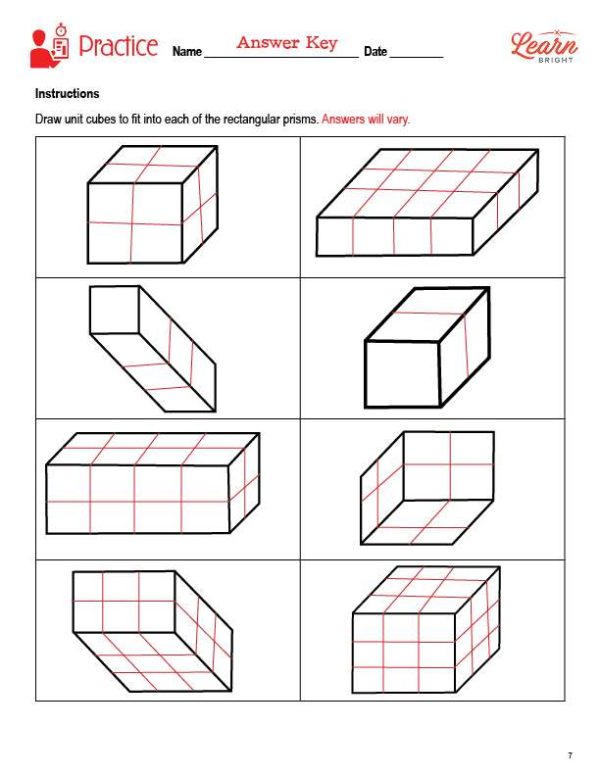
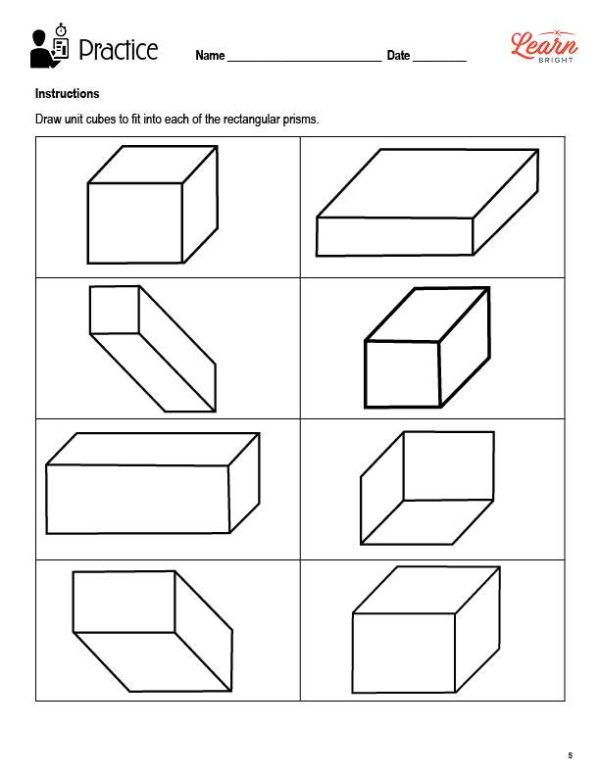
For the practice worksheet, students will draw unit cubes to fit into each of the rectangular prisms shown.
SOLID FIGURES AND CUBIC UNITS HOMEWORK ASSIGNMENT
The homework assignment asks students to answer answer a few questions about the lesson material. Students will also use unit cubes to fill an object at home and answer some questions about it.
Worksheet Answer Keys
This lesson plan includes answer keys for the practice worksheet and the homework assignment. If you choose to administer the lesson pages to your students via PDF, you will need to save a new file that omits these pages. Otherwise, you can simply print out the applicable pages and keep these as reference for yourself when grading assignments.


